RED
Poem III

From as early as I can remember, I believed wild animals would never hurt me. Their mystery, disguise, and danger felt like a boundary waiting to be decoded, a key to approaching them, or letting them approach you. I believed that *fierce things, when respected and deeply understood, could be tame and tender. It may be my most persistent flaw: the belief that the wild, when met with softness, will bow back.
To this day, it's my toxic trait. Do not try this at home unless under the influence of a spell, heatstroke, or a deeply romantic form of madness.
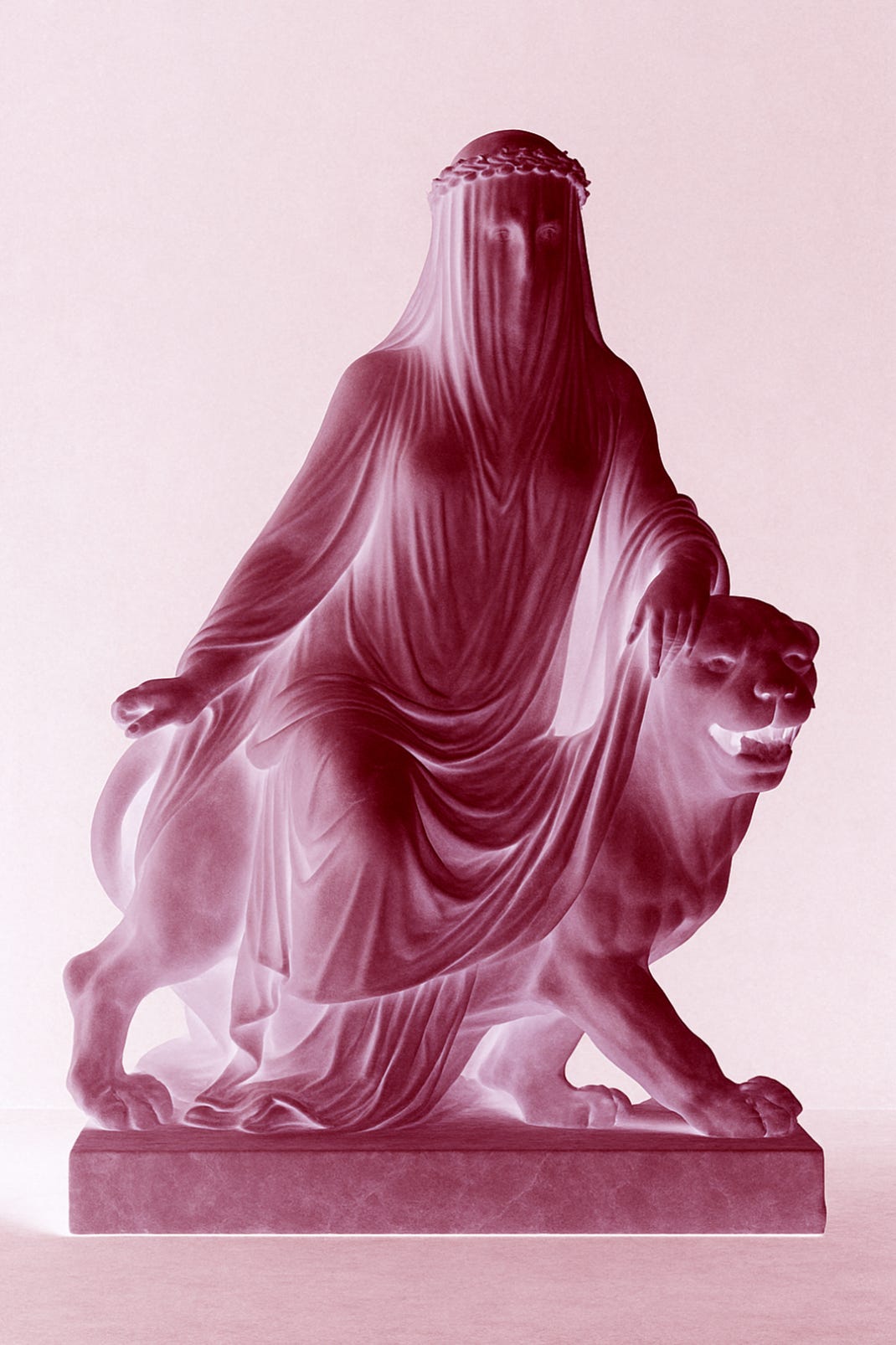
Wild, or captive, I never saw lions as beasts to battle. They’ve always appeared to me not as predators, but as matriarchs. Quiet. Strategic. Tactical. Elegant. Fierce. Majestic symbols of tough love, disciplined affection, and golden loyalty. Teachers of both critical thinking and nurturing. This poem began elsewhere but developed as a meditation on them: on their mythos, their maternal ferocity, and how often we misunderstand what power truly is.
I’ve met many Leos and lion-like women, and I’m in awe every time. Luminous, bold, with great hair they are born from the golden soil of the sun.
Ersilia, my Nonna, **is the ultimate embodiment a lion. Not just in her bronzed skin and golden auburn curls. Not just in wearing twice her body weight in gold and jewels with a La Perla bikini at the beach, daring the sun itself to dim her. But in the quiet thunder of her presence. Her voice could melt a room or freeze it. She’d stand up to injustice with the kind of regal certainty that made people obey, not from fear, but from safety.
In Venice, the lion is more than a symbol. It is a guardian spirit. Winged and sunlit, it crowns marble columns in Piazza San Marco, adorns coins and flags, and watches silently over the lagoon. The lion of Saint Mark holds a book in one paw, a sword in the other. Wisdom and power. Justice and poetry.
Even the city’s name, Venetia, echoes Venus, goddess of love and sea-born beauty. Here, strength is radiant, not ruthless. It governs not by force, but by wit and presence.
From the heart of the city, this emblem flows outward across the province, where I was born, and the surrounding region. Winged lions appear on fountains, crests, and over doorways, woven into the everyday like a quiet inheritance.
In the Tarot, too, the lion appears on the card of Strength, not subdued but gently met. Its jaw held by calm hands, not to restrain but to connect. A lesson in trust. Showing how true command is quiet. And that in a place shaped by water and gold, strength can look like stillness.
The lion may have ruled the city in icon and myth, but in life, its essence lived in women like Ersilia.
Born just before World War II, she was only seven when the Americans liberated her village in Northern Italy from Nazi occupation. They threw chocolates and bananas from tanks. It was the first time her, or anyone in her village, had tasted either. She survived war, hunger and silence, but gave us presence, elegance, structure veiled in sunlit glamour. She brushed our hair, tucked in our shirts, and gave us foot baths with exotic soaps she brought back from her annual escapes to faraway tropical paradises—usually after we’d run wild chasing her white rabbits through her ever-blooming, technicolor garden. She’d cook the most opulent, indulgent meals (always with immaculate hair and accessories), and insisted our snacks came from whatever was in season, either from our own garden or the neighbor’s. There was so much sugar. So much vanilla. So much chocolate. Divine.
As much as she delighted our senses with glamour and pleasure, she grounded us with lessons in good manners, morals, and how the world truly worked. No subject was too sensitive for her to explain with clarity, humor, and just the right dose of irreverence. Even through the tangled haze of adolescence, she remained a witty, responsible compass. An unshakable source of guidance, perspective, and comfort in the midst of hormone-fueled melodramas. She knew the world could be cruel. She taught us how to deal with it. She wasn’t afraid of taboos, they were afraid of her.
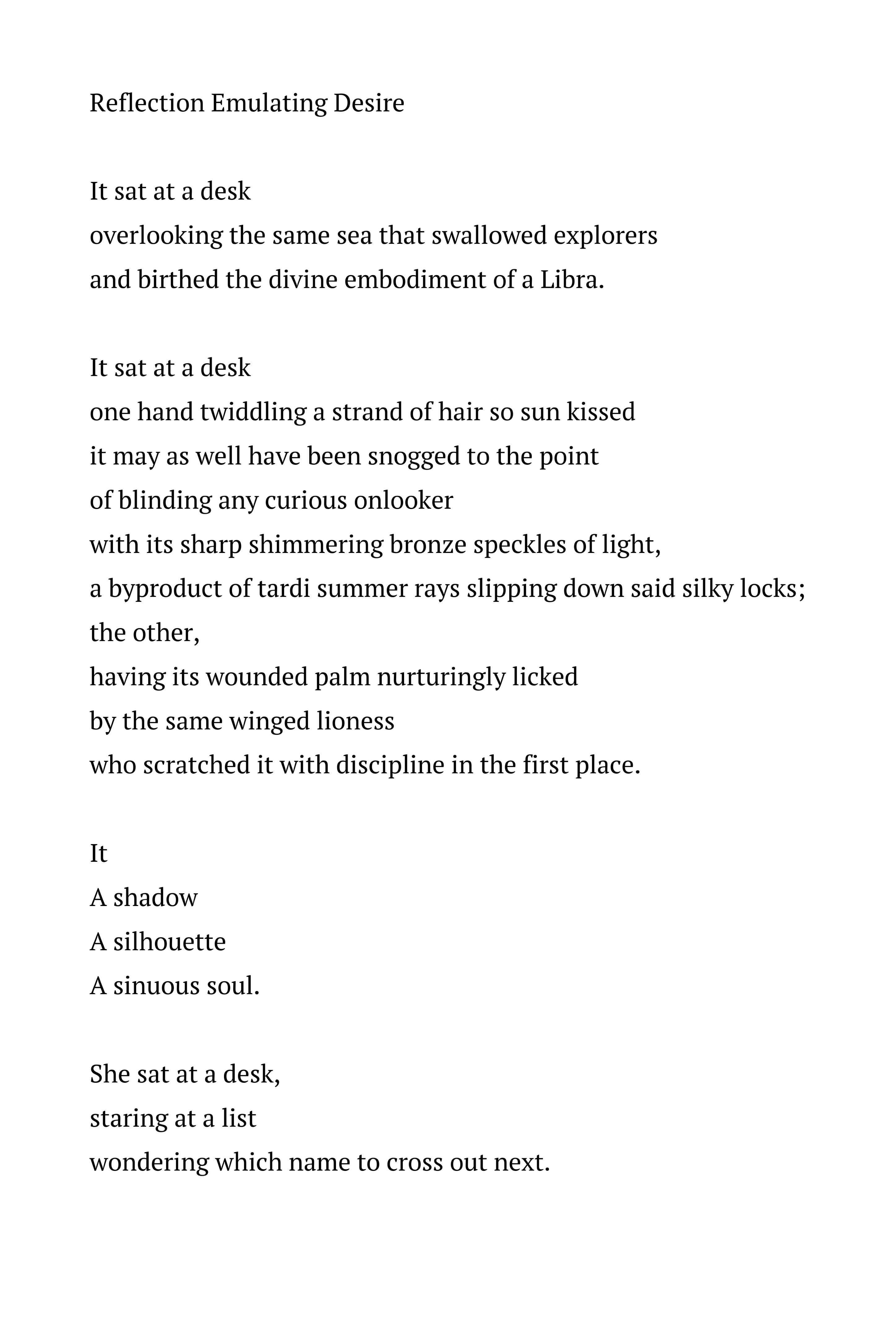
This poem sits in that same tension: between the claw and the cradle. Between scratching as a lesson, and licking the wound once the point is made. It’s about discipline that’s maternal, not punishing, and boundaries set with grace.
It came to me one humid afternoon as I sat in the car, daydreaming out the window, alongside my dearest friend Anna who, like my Nonna, has a sun in Leo. Natural curls. An aura of gold trailing her every step.
We were returning from a day spent at Gabriele D’Annunzio’s house in Lake Garda. I won’t even attempt to describe the architecture, the landscape, the decor and history of this place. Imagine the grandiose, eclectic barbie dream house of any culture vulture with a passion for archival, garden frolicking, solving mysteries and soft-water swimming. The kind of abode that makes your average Architectural Digest feature tuck its tail and quietly walk away.
A place that would, naturally, house a girl raised by a lioness. A lioness as guardian and tutor. One who taught her when to stay and when to walk away. When something could be salvaged and when it was time to let go. She taught her to cut ties like ribbon: beautiful, final, soft. Even if they once meant something sacred.
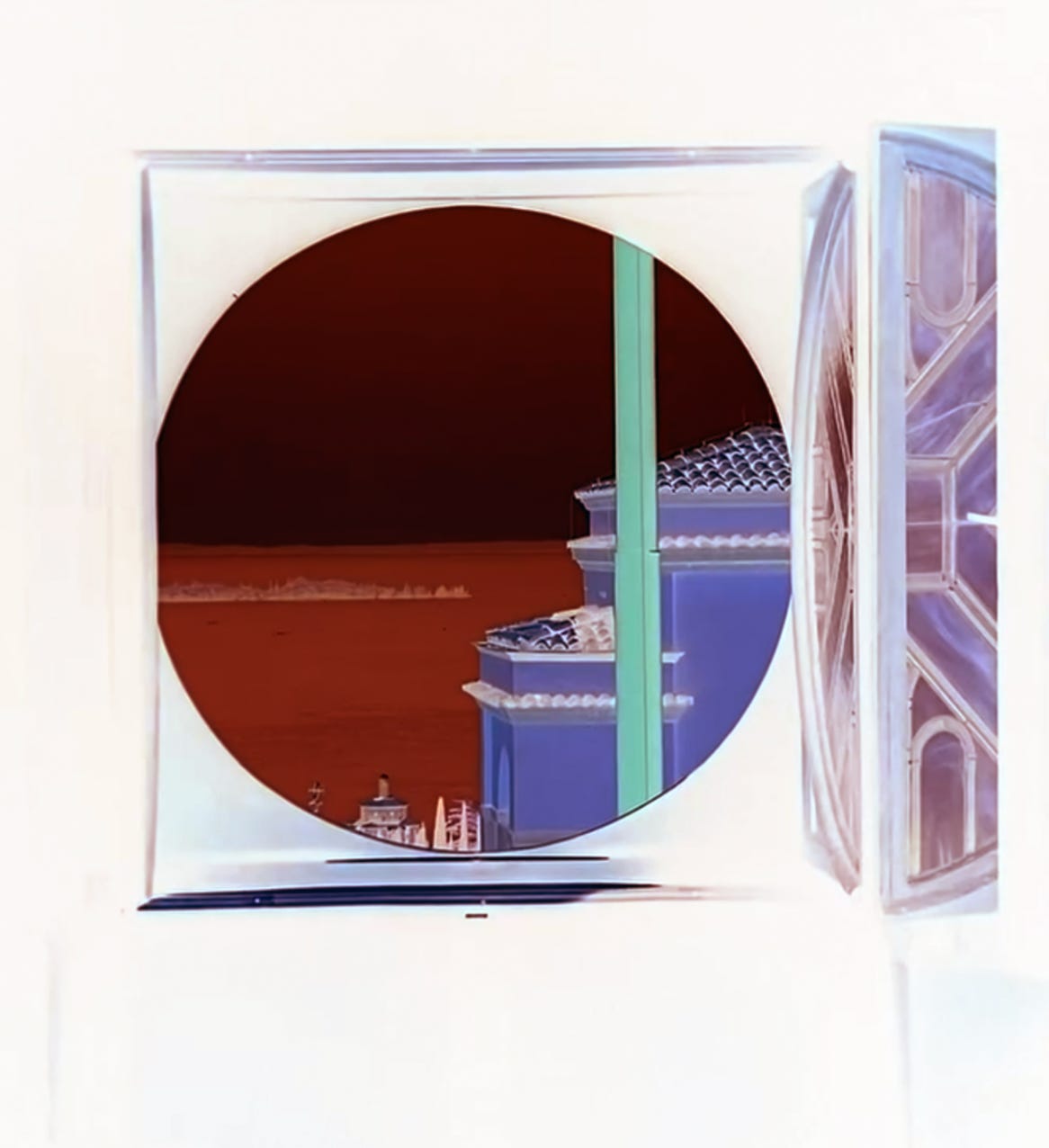
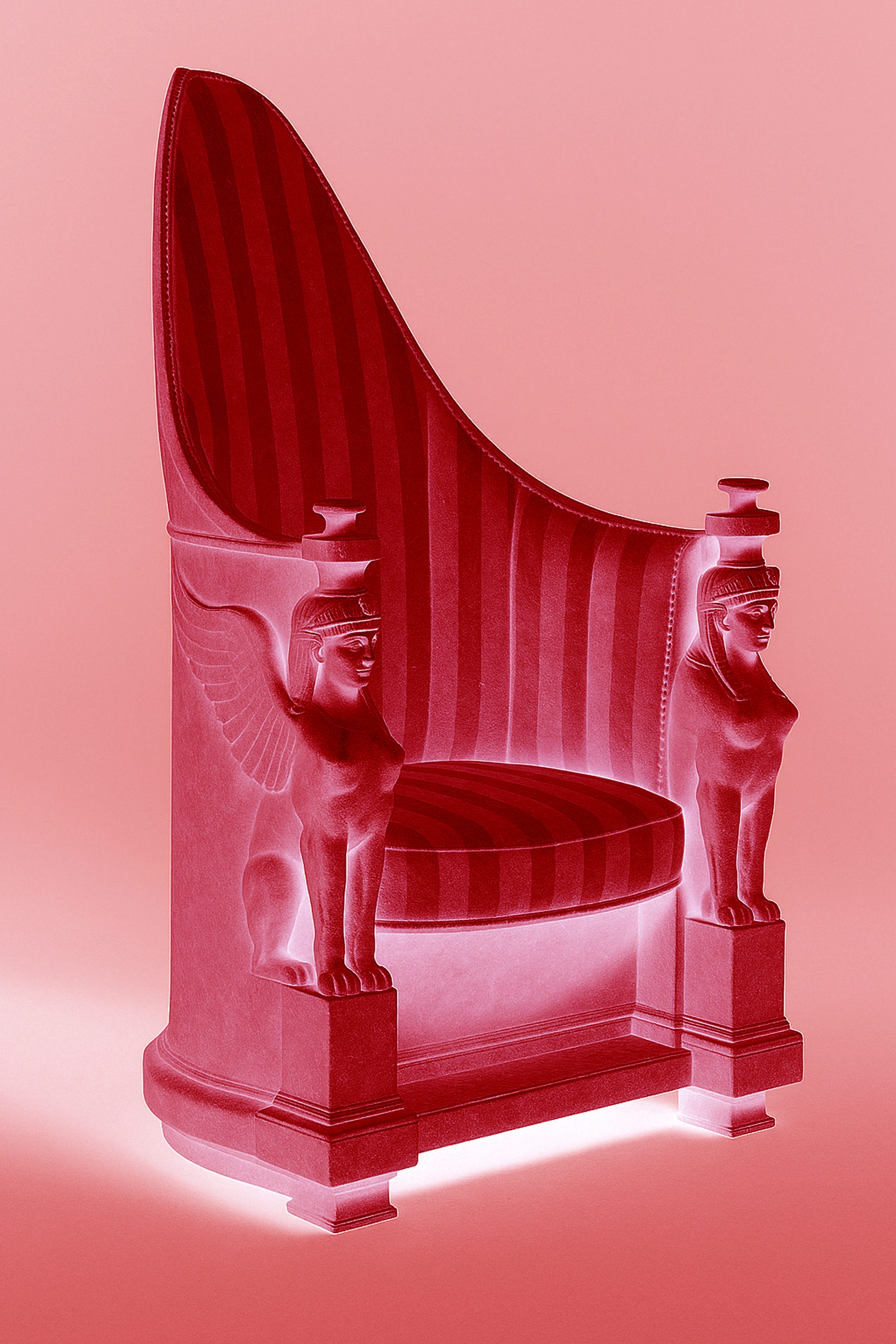
I pictured her bedroom to be at the top of that tower, overlooking the lake ( a real location in D’Annunzio’s home you can visit ). There, she sits at her desk, studying. Reflecting. She gazes out across a body of water so heavy with secret, it might as well be a mirror for desire itself. The kind of water that swallows empires, baptizes explorers, and returns none of them the same. The liquid stillness holds potential, yes. But also memory. Everything that came before. Everything she and her peers have yet to let go. And in that humid summer silence, when the sun is at its highest point, I imagine her thinking not just about her own life but about the architecture of power.
How women’s roles in battle have long been more psychological than physical. And how, with time, men too have entered the emotional battlefield. One now more visibly lived through their participation. Men increasingly entangled in the emotional architecture of restraint and sublimation, where battles are no longer fought with swords but with silence, status, and suggestion.
Gladiators once fought lions. Now, we fight each other. We fight more politically, more bitterly, more silently. We navigate systems, shape outcomes, carve out influence. We once fought tooth to tooth, and now fight with something more veiled, more strategic, more sinister. More “civilized.”
This poem breathes that lineage. Matriarchs and thresholds. It is discipline and tenderness. It wrestles with decisions, crossing names from a list. It is the lesson of when to fight, and when to let go, taught by tooth and purr.
Because she is not just looking at water. She is reading it. All its secrets. Its mysteries. Its potential. And using it as her scale of strategy.
*Fierce ≠ Feral
Fierce (Sacred powerful aggression, part intention - part instinct. Something I deeply respect)
Feral (Aggression running on high voltage chaos, zero tact - pure instinct. Something I definitely avoid... unless commissioned by Venus and temporarily possessed.)
** Ersilia departed many years ago. And though I speak and write about her attributes in the past, I refuse to speak about her presence in the past tense. For her absence is only a physical experience, and her essence endures as boldly, affectionately and unmistakably as ever before.